

Preparing to welcome a new baby is an exciting time, but finding the right childcare can also feel overwhelming. If you’re expecting a baby or have an infant at home, you want someone who is patient, attentive, experienced, and confident caring for your little one. You may be wondering what an Au Pair costs (no extra fee for infant-qualified) and if an Au Pair will work for your family.
An Au Pair for an infant can be a childcare option for families who want personalized, in-home care and the opportunity to welcome someone from another culture into their family. However, caring for a baby is different from caring for a toddler or school-age child. That’s why it’s important to understand infant care qualifications, ask the right interview questions, and make sure your chosen Au Pair has the experience your baby needs.
Here’s what parents should know when searching for an infant qualified Au Pair and how to find an Au Pair.
What Qualifications Does an Au Pair Need to Care for an Infant?
In the United States, Au Pairs participating in the Au Pair program must meet specific childcare experience requirements before being placed with families who have children under two years old.
According to U.S. Department of State regulations, an Au Pair must have at least 200 hours of documented infant childcare experience with a non-family member to be placed with a family that has a child under two years old. This requirement helps ensure that candidates have relevant experience caring for young children before taking on this responsibility.
The experience must be documented, rather than based solely on a candidate’s statement that they enjoy spending time with babies. Au Pairs are required to complete an Infant Verification form which includes:
- Each childcare experience under 2 years old
- List the age of the infants they cared for. For example 0-3 months, 3-6 months and so on.
- The dates and hours of each experience
- A Child Care reference form from each experience
When searching for an infant qualified Au Pair, look beyond the number of hours alone. Consider the candidate’s previous responsibilities, the ages of the babies they cared for, and whether their experience included hands-on tasks such as feeding, diaper changes, soothing, and following a sleep routine.
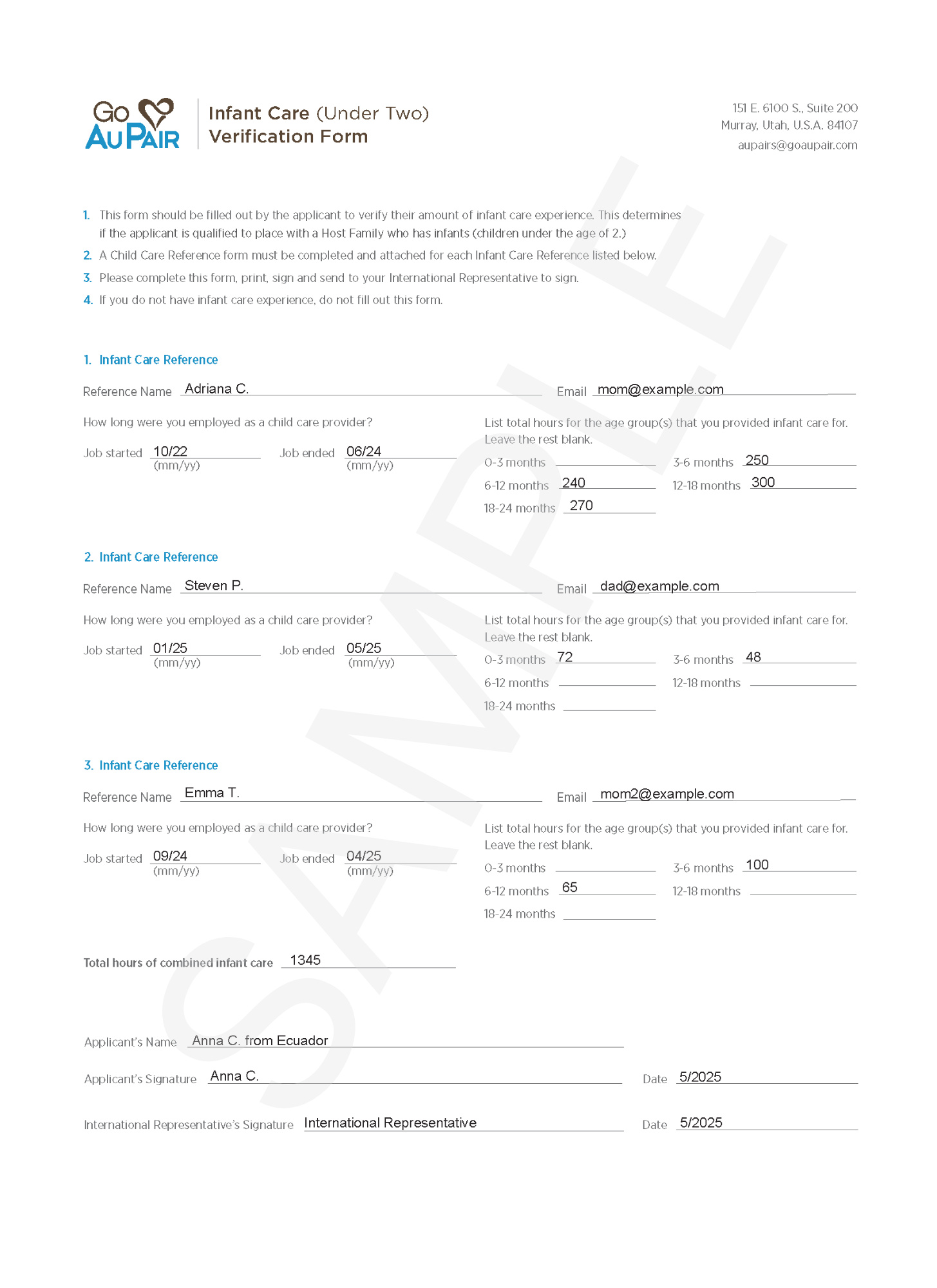
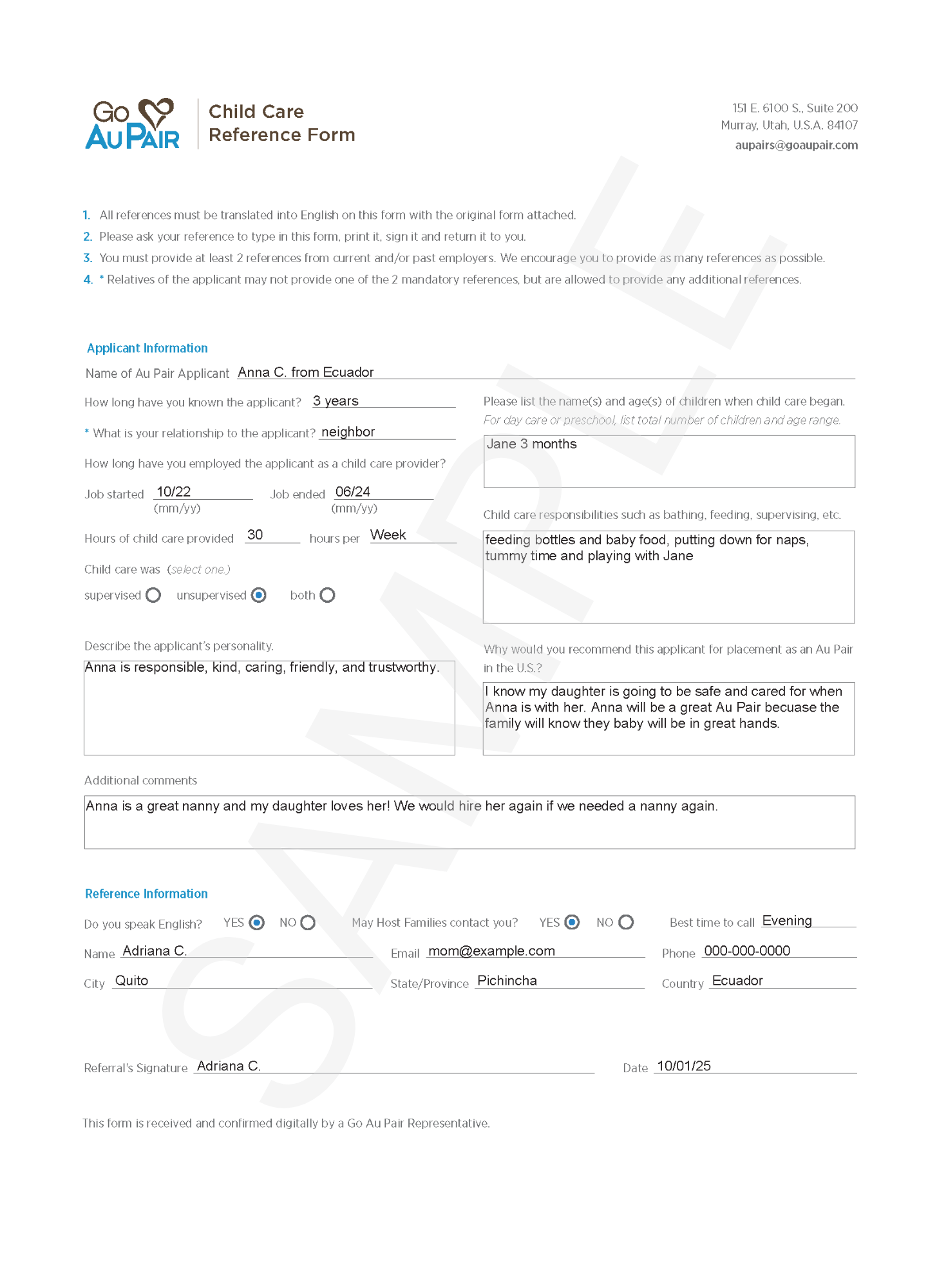
How Are the 200+ Infant-Care Hours Verified?
Not all childcare experience is the same. Caring for a young baby requires different skills from caring for a one-year-old who is crawling, eating solid foods, and exploring their surroundings.
When reviewing a candidate’s profile, pay attention to the ages of the children they have cared for and the type of experience they gained. Age brackets can help you understand whether a candidate has experience with a developmental stage similar to your baby’s.
Important: Under the U.S. Department of State regulations for the Au Pair program Au Pairs are not allowed to care for an infant under 3 months old without another adult present. Au Pairs are still allowed to care for newborns but a parent or other responsible adult needs to be in the home during childcare hours until the baby is at least 3 months old.
How to evaluate experience across common infant age groups:

0–3 Months: Newborn Care
Newborns require frequent feeding, diaper changes, gentle handling, and close attention to their needs. They may have unpredictable sleep patterns and need frequent soothing.
Ask candidates whether they have experience caring for newborns, what responsibilities they handled, and whether they followed instructions provided by the parents.
3–6 Months: Developing Routines
Babies in this age range may become more alert, interact more with caregivers, and begin developing more predictable feeding and sleep routines.
Ask whether the candidate has experience recognizing hunger and tiredness cues, soothing a fussy baby, and following a family’s established routines.


6–12 Months: Growing Mobility
As babies grow, they may begin rolling, sitting, crawling, or pulling themselves up. Caregivers must be attentive to changing safety needs and provide age-appropriate interaction.
Look for experience with safe feeding practices, floor play, supervision, and maintaining a baby-safe environment.
12–24 Months: Early Toddlerhood
Children in this age range are often increasingly mobile and curious. They may begin walking, developing language, and expressing their preferences more clearly.
Ask about the candidate’s experience supervising active toddlers, preparing appropriate meals and snacks, supporting play, and maintaining consistent routines.

How does age-bracket verification work? These age ranges are useful for evaluating a candidate’s experience, but they are not separate federal hour requirements. The federal rule establishes a minimum of 200 documented infant childcare hours for placement with children under two. It’s important to review each Au Pairs infant specific hours by age and whether the candidate’s experience matches your baby’s specific needs.
How to Interview an Au Pair for Your Baby
Once you find a candidate who meets the infant care experience requirement, the interview is your opportunity to learn whether they are a good fit for your family.
A candidate may have hundreds of documented childcare hours, but you still want to understand how they approach everyday situations and what Au Pairs can do day to day for your baby.
1. Ask About Feeding Experience
Feeding is one of the most frequent responsibilities when caring for an infant. Your Au Pair should be comfortable following your instructions and asking questions when something is unclear.
Consider asking:
What experience do you have with bottle-feeding babies?
How would you follow a feeding schedule provided by the parents?
What would you do if a baby refused a bottle or seemed unusually hungry?
Are you comfortable following instructions for handling and storing breast milk or preparing formula safely?
Look for thoughtful answers that emphasize following parental instructions, maintaining hygiene, and communicating concerns promptly.
2. Discuss Sleep Routines and Safe Sleep
Sleep can be one of the biggest concerns for new parents. Babies have changing sleep patterns, and caregivers must follow safe sleep practices rather than relying on personal preferences or outdated advice.
Ask candidates:
Have you helped parents follow an infant’s sleep routine?
What would you do if a baby had difficulty settling down?
How would you prepare a baby’s sleep space?
What would you do if a baby fell asleep somewhere other than their crib or bassinet?
A caregiver should understand the importance of how a baby should be placed during sleep and parents should help Au Pairs understand their preferences for their baby’s sleep positioning and sleep areas.
Discuss your expectations clearly and make sure your Au Pair is willing to follow current safe sleep guidance and your pediatrician’s instructions.
3. Evaluate Infant Safety Awareness
Safety should be a priority when choosing childcare for infants. Babies cannot explain what they need, and their surroundings can change quickly as they develop new abilities.
Ask scenario based questions such as:
What would you do if a baby began choking during a feeding?
How would you respond if a baby developed a fever or seemed unusually lethargic?
What steps would you take to keep a baby safe during tummy time?
What would you do if you were unsure whether a symptom required medical attention?
You don’t need to expect a candidate to know every answer immediately. Instead, look for a responsible approach: recognizing emergencies, contacting the parents, seeking appropriate medical help, and following established safety procedures. Ask about relevant infant first-aid or CPR training, and verify any certifications the candidate claims to have.
4. Learn How They Handle Crying and Stress
Caring for a baby can be rewarding, but it can also be exhausting, especially when a baby is crying and the reason is unclear.
Ask questions such as:
How do you usually soothe a crying baby?
What would you do if you tried several soothing methods and the baby continued crying?
How would you handle a particularly difficult day?
When would you contact the parents for help?
Look for patience, emotional maturity, and a willingness to ask for support. A responsible caregiver should never shake a baby. If overwhelmed, they should place the baby safely in the crib and seek help from the parents or another appropriate adult.
5. Ask for Specific Examples From Past Experience
Instead of asking only whether a candidate likes babies, invite them to describe real situations.
For example, ask them to walk you through a typical day caring for an infant. What did feeding, naps, diaper changes, and playtime look like? What responsibilities did the parents handle? What did the candidate learn from the experience?
Specific examples can help you understand whether their experience involved direct, hands-on care or more limited responsibilities.
You can also ask for clarification about the candidate’s documented hours, review their infant care references, and even contact references for more information.
What Makes an Au Pair a Good Fit for Your Baby?
Qualifications are essential, but a successful match also depends on communication, expectations, and personality.
- Childcare experience: all our Au Pairs have verified employment experience across various types of childcare.
- Infant Qualified: Specialty experience requirements to care for children under the age of 2, giving parents peace of mind.
- Driving Experience: The most common childcare responsibility – identify what will be involved in getting your Au Pair acclimated to driving in the USA.
- Personality: See personality traits to help get a deeper connection with your live-in childcare provider.
Remember that an Au Pair is also participating in a cultural exchange program. The relationship works best when both the family and the Au Pair communicate openly, respect one another, and establish clear expectations from the beginning.
Is an Au Pair the Right Childcare Option for Your Infant?
For some families, an au pair offers a flexible, personalized childcare arrangement within the home. Having a caregiver who lives with your family can make coordinating daily routines easier, and your baby can receive care in a familiar environment.
An au pair may be a good option if you value in-home childcare, want to build a close relationship with your caregiver, and are prepared to welcome another person into your household. Families must also be able to provide the required private bedroom and meet the program’s other host-family responsibilities.
However, an au pair is not the right solution for every family. If you need independent, full-time newborn care while you are away from home during the first three months, you will need another arrangement that meets the program’s requirements.
Before deciding, compare your work schedule, your baby’s expected arrival date, the level of support available at home, and the type of childcare experience you need.
Find an Infant Qualified Au Pair With Confidence
Choosing someone to care for your baby is a big decision, and it is completely reasonable to have questions. Understanding the 200-hour infant-care requirement, confirming the candidate’s documented experience, and asking detailed interview questions can help you make a more informed choice.
When searching for an au pair for an infant, remember that experience is only the starting point. You also want a caregiver who prioritizes safety, follows your instructions, communicates openly, and understands the responsibility of caring for a young child.
With thoughtful preparation and the right match, your family can begin building a supportive childcare relationship during one of life’s most exciting transitions.
Start your search with Go Au Pair and learn more about finding a candidate whose experience, personality, and childcare approach align with your family’s needs.