





Au Pair Recruitment
 At Go Au Pair, we partner with International Representative Agencies (IRs) in each country where our Au Pairs are recruited from. These IRs find Au Pairs with strong English language and child care skills.
Host Families can rest assured knowing that our IRs prioritize finding candidates with a range of childcare experience beyond babysitting, such as working in a daycare or youth groups. Our IRs focus on recruiting mature and responsible Au Pairs with driver’s licenses in their home country and at least 200 hours of experience caring for children under the age of two.
All potential Au Pairs must apply through an International Agency and anyone who contacts Go Au Pair directly is connected with the agency in their home country. Our IRs are fully responsible for recruiting young hopefuls into the Au Pair program, and we trust them to find the best possible candidates for our Host Families.
At Go Au Pair, our partnership with IRs helps us to find the most qualified and experienced Au Pairs from around the world.
Au Pair Screening
Potential Au Pairs considering the Au Pair Program are then provided with detailed information about the program’s requirements and responsibilities by our IRs to manage expectations on both the fun of living and traveling in America and the hard work and dedication needed to care for children and live with the Host Family.
Our IRs will help register the potential Au Pair’s information in our online community and ask them to complete the online application. From here, the IR will continue to screen potential Au Pairs across numerous minimum requirements to ensure they meet our experience, maturity, and language skills standards.
Our screening process guarantees that only the most qualified and experienced Au Pairs are accepted into our program, providing our Host Families with responsible, reliable, and experienced caregivers.
Au Pair Application
 Our online application process includes a thorough review of candidates’ childcare experience, age group preferences, and personality traits by our IRs to ensure they meet our Au Pair requirements. We also verify each candidate’s criminal background and passport validity for at least two years.
Our IRs conduct an interview in English to verify the candidate can communicate effectively, genuinely desires to become an Au Pair, and is interested in caring for children safely.
We encourage candidates to showcase additional certifications or awards to demonstrate their dedication to the profession.
Additional documents are required for Au Pairs to extend their program for a second year before their profile becomes available online again.
Au Pair Agreement
We make it our mission to find Au Pairs fully prepared for the program, with a deep understanding of their responsibilities as part of the cultural exchange experience.
Before an Au Pair profile is made available on our website, we require them to sign an Au Pair Agreement that covers all the essential details, including general program requirements, allowed child care duties, maximum allowed child care hours, minimum stipend and minimum paid vacation amount. Only the Host Family can specify the details of child care responsibilities and stipend which the Au Pair reviews and agrees to as part of accepting the offer at match. This solidifies that they clearly understand what is expected of them and how they can contribute to your family’s needs.
Our International Representatives are available to help explain all legal aspects of the agreement to our Au Pairs, ensuring they fully understand what they agree to before signing. This agreement solidifies expectations and clearly communicates duties so that Au Pairs are fully prepared to provide the best possible care for your children.
The agreement also covers fees and expenses that the Au Pair must pay during their programs, such as program fees, optional insurance upgrade costs, and potential additional costs. By requiring all of our Au Pairs to sign the agreement, we ensure that you get an Au Pair who is ready and committed to providing excellent child care.
Online Psychometric Test
 We care about ensuring that our Au Pairs are a good fit for the program, and that’s where the online psychometric test comes in. It’s one of the final steps required for an Au Pair to complete the application process, and it helps us determine how well-suited they are for child care.
The test consists of seven categories:
- Adjustment
- Ambition
- Sociability
- Interpersonal Sensitivity
- Prudence
- Inquisitive
- Learning Approach
Each category is calculated into a percentage, which is used to determine if the applicant is a “Moderate Fit” or “High Fit” for the program. This test streamlines the process, allowing us to find Au Pairs who don’t just have experience caring for children, but the disposition to integrate seamlessly into family dynamics.
We want to ensure that our Au Pairs have the best possible experience. That’s why we take the online psychometric test seriously, connecting dedicated caregivers with work opportunities in the U.S. doing what they love.
Au Pair Child Care Training (Required 32 hours)
 We want every family to feel safe and secure with their live-in help, which is why we require all our Au Pairs to complete a mandatory Child Care Training program.
This program consists of 32 hours of online training focused on childhood development and safety. To complete the training, Au Pairs must watch 32 hours of training videos, read the training manuals, and conduct all the required exercises and tests. This ensures that your Au Pair is knowledgeable and qualified to care for your children.
At Go Au Pair, we take pride in our training program, which sets us apart from other agencies. While other agencies conduct in-person workshops, which can be difficult for Au Pairs to absorb quickly, our agency provides self-paced online training, so our Au Pairs have the knowledge and skills to provide the best possible care for your family.
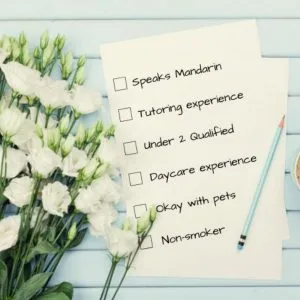 Identifying your needs when trying to find an Au Pair lays the foundation for a successful and harmonious relationship. An au pair serves as a valuable addition to a family, providing support and care for children while offering cultural exchange. By clearly defining your requirements, you can ensure that you find an au pair who aligns with your family’s values, lifestyle, and childcare expectations.
When identifying your needs, consider factors such as the desired level of experience, personality, language proficiency, specific skills (e.g., cooking, tutoring), and the number of hours or days of assistance required. By being thorough in your assessment, you can find an au pair who not only meets your practical needs but also forms a genuine connection with your family and offers a nurturing and supportive environment for your children. Completing the Host Family Profile and Successful Placement Questionnaire helps families realize and prioritize their needs both for child care and personally.
 Now that you know what your family’s requirements are, it’s time to start the search for someone who meets those needs. You can quickly filter your results by age, nationality, language skills, experience, and availability. Review the au pair profiles thoroughly, paying attention to their personal descriptions, childcare experience, and any additional skills or qualifications they possess. Take note of candidates who seem to align well with your family’s needs and values.
As you come across potential favorites, add them to your shortlist. This allows you to keep track of the au pairs you find most promising. As you browse through your top au pair profiles, take note of specific qualities or experiences that stand out to you, such as a strong educational background, experience with specific age groups, or relevant certifications. By carefully selecting up to 20 favorites, you can ensure a manageable number of candidates to further evaluate and eventually initiate conversations with, moving you closer to finding the ideal au pair for your family.
 After creating your list of favorites, it’s time to narrow it down to an A-list of your top 5-10 candidates. When evaluating and ranking your top Au Pairs, it is essential to consider what’s most important to you. Begin by reviewing each au pair’s profile in more detail, paying attention to their experience, qualifications, and any specific skills that align with your family’s needs. Take note of their previous childcare roles, the age groups they have worked with, and any relevant certifications or training they have obtained.
Consider their personality compatibility and how well they may integrate into your family’s lifestyle. Evaluate their personal interests, hobbies, and values to gauge if they would be a good fit for your family dynamics. Additionally, read reviews and testimonials about the Au Pair’s previous child care experience. This feedback can offer valuable perspectives on the au pair’s reliability, responsibility, and ability to establish a positive rapport with children.
Once you have gathered this information, rank the Au Pairs based on your preferences and priorities. Trust your instincts and choose the au pairs who you believe would best meet your family’s needs and create a harmonious environment for your children.
 Now it’s time to start getting to know your potential Au Pairs. When it comes to communicating and scheduling interviews with your top candidates, it’s important to establish clear and efficient communication channels. Start by sending personalized messages or emails to each candidate, expressing your interest in their profile and inviting them for an interview. You can share your Family Profile with the au pair so they can learn about you. We recommend sharing your profile prior to the interview to ensure au pairs are interested in matching.
To keep you from getting overwhelmed, we recommend starting with 3-5 interviews. Provide options for interview dates and times, taking into consideration time zone differences if applicable. Offer flexibility to accommodate the au pair’s schedule as well. It’s advisable to suggest multiple time slots to increase the likelihood of finding a mutually convenient time for the interview.
When scheduling the interviews, use video call platforms such as Skype, Zoom, or FaceTime for a more interactive and personal conversation. Video interviews allow you to observe the candidate’s non-verbal cues and assess their communication skills and overall demeanor.
Once you’ve initiated contact with an Au Pair, they will have the option to politely decline to match with your family and be removed from your favorites. This useful feature enables both the Host Family and Au Pair to focus on finding their ideal match. You’ll be notified via email if an Au Pair declines to work with your family, so you won’t wonder why they’re no longer visible inside the community.
 Interviews will help you narrow down the perfect person for the job based on your needs. We recommend conducting at least two interviews. We also provide recommended interview questions to help you make the right choice.
During the interviews, ask open-ended questions about their childcare experiences, their approach to handling different situations, and their expectations of the au pair role. Discuss logistical details such as hours, responsibilities, and any specific requirements or concerns you may have. Take notes and compare their responses with your initial criteria to evaluate their suitability.
After the interviews, give yourself time to reflect on each candidate’s strengths and weaknesses. Consider how well they addressed your concerns, their level of enthusiasm, and the connection you felt during the conversation. Use these insights to further narrow down your choices and make an informed decision.
By establishing effective communication and conducting thorough interviews, you can ensure a smoother and more successful selection process, ultimately finding the au pair who is the best match for your family.
 Congrats, it’s time to invite your Au Pair to join your family! Once you feel you’ve found your perfect match, promptly extend an offer with the selected au pair and express your interest in having them join your family.
A member of our team will help facilitate the matching process and confirm the Au Pair accepts. In order to mutually match, your Family Profile, photos, detailed duties, and benefits are provided to the au pair. The au pair must accept the offer and once accepted, the Go Au Pair team will help finalize the next steps. These include agreeing to the contract, completing relevant documents, arranging travel plans, and more.
Only families with approved Family Profiles can complete these steps and find an Au Pair. If you’re ready to get started, register and complete your profile today!